A Miracle Opens the Way to the Beatification of Father Beshara Abou-Mrad (1853–1930)
News of a recognised miracle has brought great joy to devotees of Father Beshara Abou-Mrad, the Greek Catholic priest whom many describe as “the Lebanese Curé of Ars.” A healing attributed to his intercession has been examined and officially recognised by the medical commission connected to the Dicastery for the Causes of Saints, opening the way for his beatification.
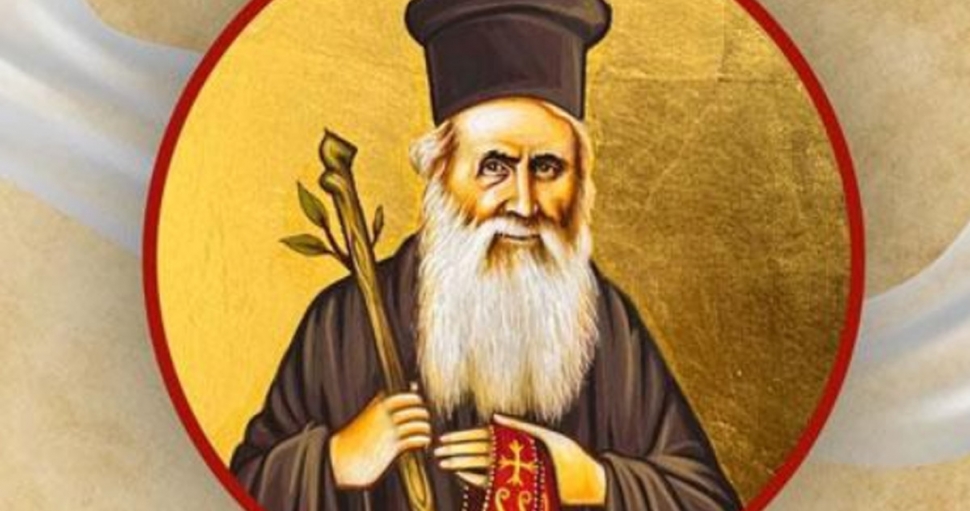
Father Beshara Abou-Mrad, a priest of the Basilian Salvatorian Order, was proclaimed Venerable in 2010 by Pope Benedict XVI. Today, the confirmation of a miracle is a major step toward the Church’s official declaration of his beatification.
A Life Marked by Holiness and the Sacrament of Confession
During his lifetime, Father Beshara was widely venerated for the holiness of his life. He became especially known for his exceptional dedication to the confessional, where he sometimes spent up to twelve hours at a time, guiding souls with wisdom, gentleness, and discernment. Many who met him believed that God worked through his ministry to renew hearts and strengthen faith.
He lived with a deep sense of responsibility for the salvation of souls, identifying with the “watchman” described by the Prophet Ezekiel, called to warn and to remain faithful before God (cf. Ezekiel 3:17). As a sign of reverence, his mortal remains are entombed within a wall of the Church of the Convent of the Holy Saviour (Deir Al Mokhalles) in Joun, north of Saida—resting in a holy place.
The Miracle: Healing of Thérèse Skaff Asmar (2009)
The miracle recognised by the Church concerns the healing of Thérèse Skaff Asmar in 2009. She suffered from severe osteoarthritis (grade IV) that significantly impaired her daily life. In what seemed like a providential moment, she discovered a brochure about Father Beshara while searching through a drawer for a piano booklet her daughter needed. Moved by faith, she began to ask for his intercession.
After medical evaluation and careful examination, the healing was declared “direct, complete, and permanent,” a formula the Church uses to indicate a healing that is not only lasting, but also clearly linked to the intercession of a specific servant of God. The miraculous nature of this healing was established on 27 March 2015, according to the postulation of the cause.
From Zahle to the Basilian Salvatorian Order
Father Beshara Abou-Mrad was born in 1853 in Zahle, a large Christian city in the Bekaa Valley. Baptised Salim Jabbour Abou-Mrad, he was still a child when his family was forced to flee the tragic events and persecutions of 1860, taking refuge in Keserwan. When the danger passed, they returned to Zahle.
His religious vocation matured early, though it was not immediately accepted within the family. His father hoped he would pursue a future in business. It was through the steadfast support of his mother that Salim was finally able to enter religious life.
In 1874, at the age of 21, he joined the Basilian Order of the Most Holy Saviour. Even then, he considered himself unworthy of the priesthood and required encouragement to accept ordination. Later, he would also need to be persuaded to take on the demanding ministry of hearing confessions—yet it became the very place where his spiritual fatherhood shone most.
Tireless Service Across Deir el-Qamar and the Mountain Villages
His pastoral journey passed through several stages. In time, he was entrusted with major responsibilities, and beginning 8 November 1892, he was appointed to serve the vast parish of Deir el-Qamar.
In an era without highways or cars, he travelled on foot along mule tracks and rugged mountain paths. For thirty years, he walked tirelessly between Deir el-Qamar and the surrounding villages and hamlets, serving people through preaching, prayer, guidance, and the sacraments. His love for God and for souls made him relentless in mission, even when companions asked him to slow down.
Final Years in Saida and a Holy Death (1930)
In 1922, due to age and exhaustion, he was relieved of his heavy pastoral load and appointed to serve at the cathedral of Saida, where he dedicated himself once more to the confessional with remarkable perseverance.
He died at the Convent of the Holy Saviour in 1930, surrounded by the affection and prayers of his brother monks. His departure occurred on the eve of the opening Sunday of Great Lent—a time dedicated to the remembrance of the departed. Those near him recalled that he appeared to be “waiting,” as if he had an appointment, counting time quietly. Like many saints, it is believed that he sensed the approach of his passing. Through the night, prayers and litanies accompanied him until he breathed his last at daybreak.
Fruits of Intercession and Hope for Beatification
Many testimonies speak of graces obtained through his intercession: comfort to the dying, children born to sterile couples, healing from illness, relief during hardship, and even rain after long drought. Such accounts reflect the deep confidence people have placed in his prayer and his closeness to God.
With a medically authenticated miracle attributed to his intercession, the process now moves toward further ecclesial review, including theological verification and procedural steps required before the final decree and celebration can take place. Practical requirements may include the handling of relics, according to the norms of the Church.
When the process is completed, the beatification ceremony is expected to take place in Lebanon, at the Convent of the Holy Saviour (Deir Al Mokhalles)—a moment many faithful eagerly await.